
Mathematics
Discover how our Mathematics Department develops confident and motivated students who are effective problem solvers.
Vision
A community of confident and motivated students who are effective problem solvers and team players.
Mission
To equip students with essential mathematical knowledge and skills for everyday life and continuous learning.
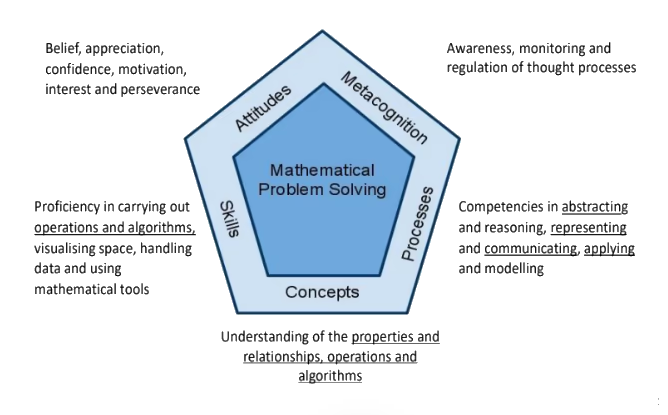
MOE Mathematics Curriculum Framework
Our Mathematics curriculum is guided by the MOE framework, emphasising problem-solving as the central focus. Students develop conceptual understanding, skills, and positive attitudes through a structured and engaging approach.
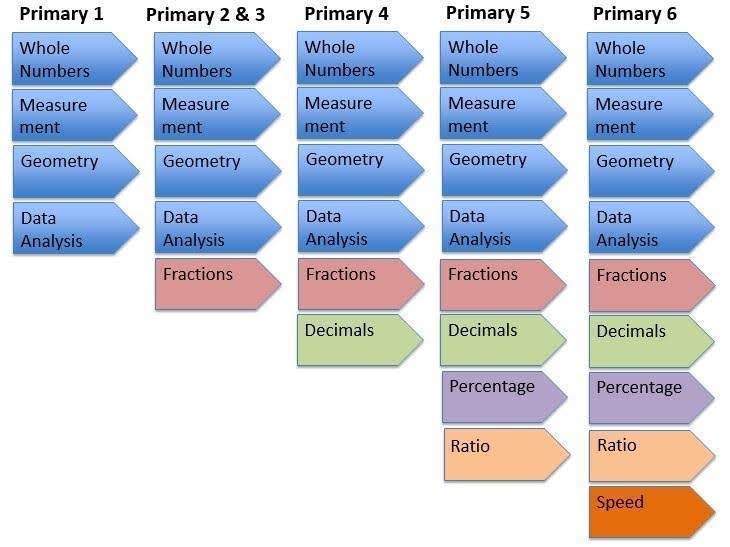
Our Math Curriculum
Our curriculum reinforces concepts progressively, deepening understanding and strengthening problem-solving skills for a strong mathematical foundation using the spiral approach.
Our Key Programmes:
Learning Support for Math (LSM)
Provides early intervention for P1-P4 students to build a strong numeracy foundation and develop confidence in Mathematics.
Talent Development Programmes
Olympiad Training: Equips high-ability students with advanced problem-solving techniques for Olympiad competitions.
E2K Math Programme: An enrichment programme for upper primary students to foster independent learning, reasoning, and collaboration.
Math Games @ Recess
Weekly hands-on activities led by Math Ambassadors and Parent Volunteers to explore Mathematics in a fun and interactive way.
Authentic Learning Experiences
At our school, Mathematics comes alive through everyday experiences that children recognise and enjoy. Students build their understanding of numbers, measurement and problem-solving by baking, shopping and exploring real-world situations. Whether they are measuring ingredients for a recipe, working out costs at a set-up stall, or sharing and dividing fairly, students learn that Mathematics is a practical skill they use every day. These authentic experiences help students develop confidence, curiosity, and a genuine connection to their learning.
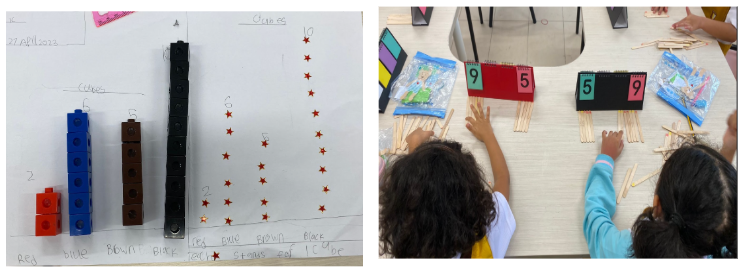
LSM in Action – Students use manipulatives to strengthen numeracy skills.
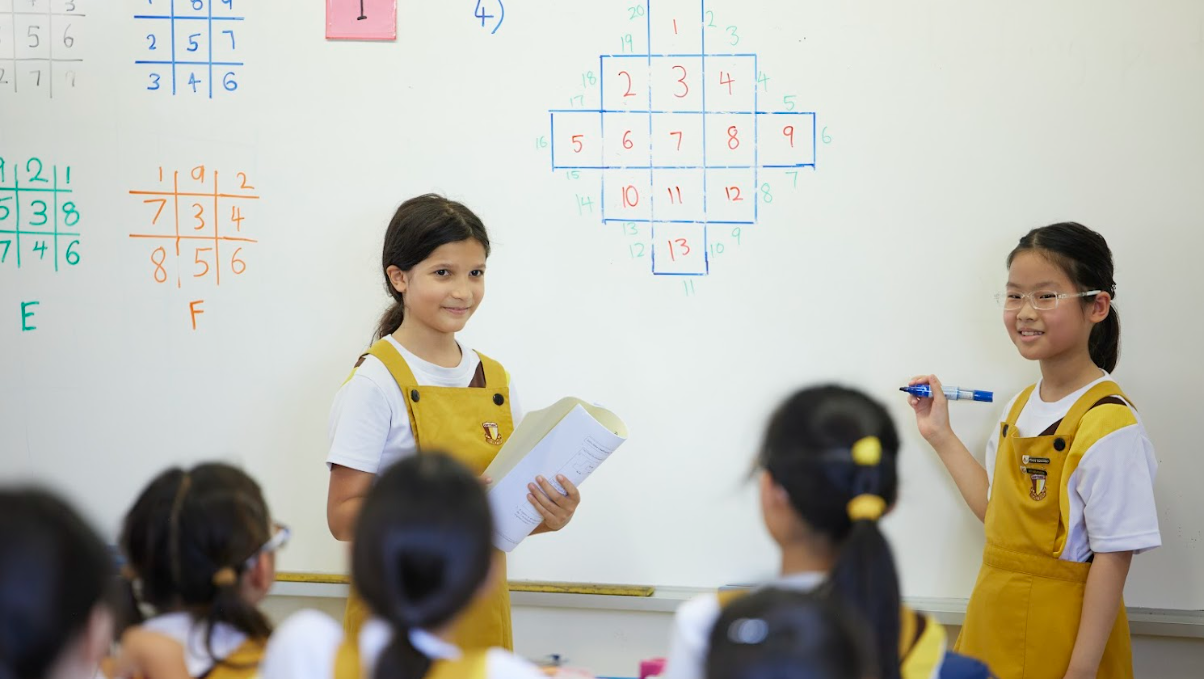
Collaborative exploration of mathematical concepts in the E2K programme.
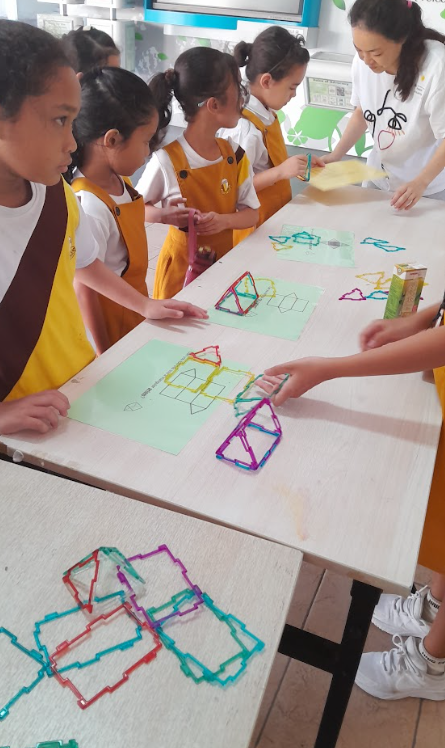
Students reinforce their learning through games during recess.
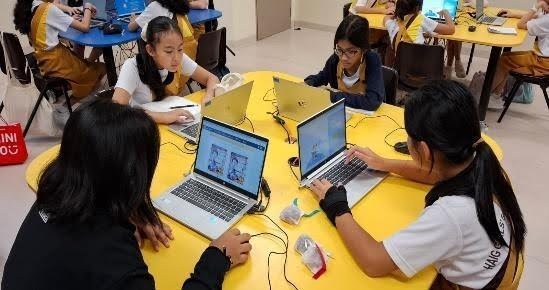
Interactive learning on digital platforms.
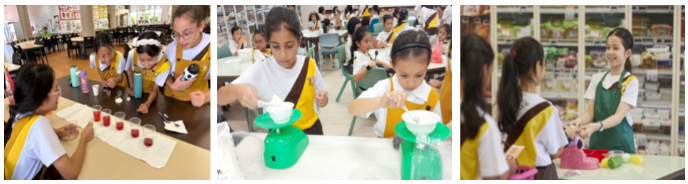
Applying Mathematics in real-world contexts – measuring to bake, counting money to buy things.
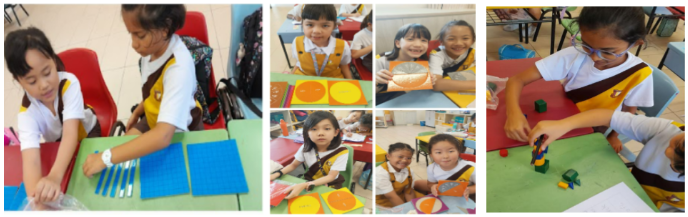
Concrete-Pictorial-Abstract (C-P-A) Approach: Hands-on learning using concrete materials.
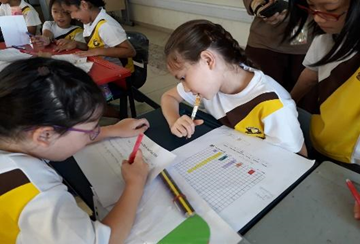
Collaborative Peer Learning – Students worked together to solve problems.